Shaping Child Welfare’s Next Chapter
through Innovation and Resilience
CWLA 2027 Conference
April 5-7, 2027, in Arlington, VA
Registration Fees
General Registration
Member Organization $690; Individual Member $730; Non-Member $780
Premium Registration (includes CEUs & Training Institute)
Member Organization $815; Individual Member $855; Non-Member $895
Presenter Registration
Member Organization $450; Individual Member $475; Non-Member $510
Training Institute Only
Member Organization $165; Individual Member $185; Non-Member $205
One Day Registration
$325.00
Conference Schedule
Sunday, April 4, 2027
Check-In
12:00 pm – 5:30 pm
Training Institute
12:30 pm – 4:30 pm
Members-Only Reception
5:00 pm – 6:00 pm
Monday, April 5, 2027
7:45 am – 5:00 pm
Check-In
8:15 am – 9:45 am
Members-Only Meeting
9:30 am – 10:00 am
Coffee
10:05 am – 11:35 am
Workshops A
11:55 pm – 1:35 pm
Lunch Plenary
1:55 pm – 3:25 pm
Workshops B
3:45 pm – 5:15 pm
Workshops C
5:15 pm – 6:15 pm
Reception in Exhibit Hall
Tuesday, April 6, 2027 (Advocacy Day!)
7:45 am – 8:15 am
Coffee
8:15 am – 9:45 am
Policy Plenary
10:05 am – 11:35 am
Workshops D
11:50 am
Social Lunch / Head to Capitol Hill
1:20 pm – 2:50 pm
Workshops E
3:10 pm – 4:40 pm
Roundtable Rooms
4:45 pm – 5:45 pm
Reception in Exhibit Hall
Wednesday, April 7, 2027
7:45 am – 8:15 am
Coffee
8:15 am – 9:45 am
Workshops F
10:05 am – 11:35 am
Closing Plenary
Coffee and snacks will be provided each day, lunch will be served on Monday, April 5 and Tuesday, April 6, and light bites will be available at the evening receptions.
Join us in thanking our conference sponsors,
who make this event possible!




Workshops & Roundtables
CWLA reserves the right to move workshops, add or remove presenters, and change workshop descriptions without notification. This list represents a draft of workshops but not the final version. Small changes will be reflected in the conference program but may not show on the website.
Monday, April 5, 2027
Workshops A
10:05 am – 11:35 am
A1 – CWLA Policy Workshop
Topic TBA
A2 – CWLA Leadership Touchstones Workshop
Topic TBA
A3 – From Crisis Response to Community Support: Building Adoption Competent Systems of Care
Families connected to foster care, adoption, and kinship care have needs that may be misunderstood or inadequately supported. Without appropriate local services, escalating behavioral health, relational, and coordination challenges can lead to unnecessary reliance on hospitals, law enforcement, or out-of-home care. This workshop will explore how adoption-competent systems of care can respond earlier and more effectively. Presenters will highlight the role of collective professional development in helping individuals and systems understand families’ needs and build responsive community supports. Participants will examine practical, scalable approaches for strengthening family-centered care, stabilizing families, and addressing concerns before they develop into individual or community crises.
Presenters: Laura Ornelas & Dawn Wilson, Center for Adoption Support & Education (C.A.S.E.)
A4 – Behavior, Distress, Crisis, or Danger? A Clinical Decision Framework for Child Welfare
When concerning behavior occurs, child welfare professionals must distinguish typical adolescent behavior, trauma-related distress, an emerging mental health crisis, and an immediate safety threat. Misreading the situation can lead to avoidable police involvement, placement disruption, restraint, hospitalization, or unmet clinical needs. This interactive workshop will introduce the Four-Level Clinical Decision Framework, a practical approach to matching the level of need with the least punitive effective response. Drawing on lived experience, policy, and clinical perspectives, presenters will guide participants through cases involving family conflict, racial trauma, psychiatric distress, and immediate danger. Participants will practice assessment, co-regulation, clinical consultation, and restorative repair, and identify ways to strengthen local crisis response.
Presenters: Kelsey Sanabria, Shawn Mines & April Curtis, Foster Care Alumni of America
A5 – Beyond the Buzz: AI That Frees Social Workers to Focus on Families First
Child welfare professionals face significant documentation demands, complex caseloads, and emotional strain. This workshop will explore how the District of Columbia’s Child and Family Services Agency is using worker-centered artificial intelligence to reduce administrative burden and strengthen everyday practice. Presenters will demonstrate applications for contact notes, person searches, and case summaries that help staff document services, prevent duplicate records, and understand case histories. The session will also examine the leadership, coaching, transparent safeguards, and ongoing monitoring needed to build staff confidence in responsible AI use. Participants will learn practical steps for introducing these tools while keeping professional judgment and relationships with families at the center.
Presenters: Sarah Koreishi, Tanya Trice & Samira Alikadiyeva, District of Columbia Child and Family Services Agency
A6 – Leading Transformation: Kinnect to Family Best Practices and KinFirst Implementation Success
Kinnect to Family is an approach to intensive family search and engagement that expands and strengthens family connections through relationship-centered permanency work. This workshop will explore how agencies can Search, Engage, Explore, and Kinnect (SEEK) natural support networks. Presenters will highlight practices such as genograms, family support plans, and engagement strategies, alongside coaching, technical assistance, and capacity-building supports that help sustain implementation. Drawing from work across diverse communities, the session will examine how the six conditions of change support KinFirst implementation and lasting systems transformation. Participants will identify adaptable approaches to strengthen family engagement, belonging, and permanency outcomes.
Presenters: Stephanie Beleal & Shannon Ward, Kinnect
A7 – Immigration and Child Welfare: Safety and Decision Making at the Intersection
Immigration enforcement creates complex questions about child safety, kinship placement, and family reunification. This participatory session will explore how the threat of deportation affects decisions about placement with and licensure of immigrant kin. Presenters will examine how social, community, and cultural norms influence assessments of parental protective capacities and safety in international reunification cases. The session will also address immigration legal representation, barriers to kinship care for families with mixed immigration status, and reasonable efforts to support parents who have been deported. Participants will consider how to adapt existing child welfare frameworks to these challenges while preserving family connections and carefully assessing children’s safety.
Presenters: Aaron Gentry & Nadine Toppozada, Casey Family Programs
A8 – Leading With the Brain in Mind: Building a Child Welfare Workforce That Thrives
A stable, skilled, and supported workforce is essential to improving outcomes for children and families. This session will introduce Allies4Outcomes’ Neuroscience-Informed Immersive Leadership and Practice Capacity-Building model, which pairs brain-based leadership with technical, managerial, and relational skills. Presenters will explore how low trust, limited psychological safety, and change fatigue contribute to turnover, and how coaching, observation, experiential learning, and communities of practice can strengthen daily agency work. Participants will examine approaches to building trust, supporting emotional regulation, and connecting policy with practice at every leadership level. The session will offer practical strategies for developing healthier organizational cultures and sustaining workforce capacity.
Presenters: Angela Pittman-Vanderweide & Gregory Grier, Allies4Outcomes; Katie Swanson
A9 – Bridging Birth & Beyond: Embedded Clinical Liaisons for Improved Birth Outcomes and Early Childhood Prevention
Embedding staff within clinical settings can help families access support beyond a single referral or episode of care. This session will explore The Children’s Home Society of New Jersey’s clinical liaison model, including a full-time liaison at an outpatient OB/GYN site in Trenton. Presenters will examine how the role connects patients and their children with WIC enrollment, lead testing, developmental resources, and community partners. A case study of a cultural competency training series for providers will illustrate what sustained relationships with families and clinical teams make possible. Participants will consider a replicable framework for embedding liaisons in clinical settings and connecting this work with broader early childhood systems planning.
Presenter: Uzo Achebe, The Children’s Home Society of New Jersey
A10 – You Belong Here: Supporting LGBTQIA+ Youth in Safe, Affirming Homes
Every young person deserves a home where they feel safe, valued, and free to be themselves. This workshop will give foster, adoptive, and kinship caregivers practical approaches for creating affirming homes for children and youth who identify as LGBTQIA+. Through realistic scenarios and guided discussion, participants will practice responding when a young person shares their identity, respecting names and pronouns, navigating difficult conversations with family members, and advocating for young people at school and in child welfare settings. Grounded in trauma-informed and antiracist practice, the session will also explore how racism, ableism, and anti-LGBTQIA+ bias shape experiences in care. Participants will identify everyday strategies to build trust, strengthen family connections, and support belonging.
Presenters: Kenisha Coon-Santiago, Kenisha Coon-Consulting; Phoenix Santiago, Phoenix Santiago Consulting
A11 – Built Different: Tailoring Medicaid for Children and Youth Connected to Foster Care
Medicaid benefits and partnerships can help child welfare agencies meet the needs of children, youth, and families while making effective use of limited resources. Through interview-style case studies and interactive discussion, this workshop will explore opportunities to use existing Medicaid-covered services and supports that may otherwise be funded through county or agency resources. Presenters will examine ways to strengthen collaboration with Medicaid health plans and improve connections to available benefits. Participants will consider how these partnerships can support access to healthcare, make better use of available funding, and reduce unnecessary costs for child welfare agencies. The session will offer practical strategies for applying these approaches in participants’ own communities.
Presenters: Michelle Turner, Here Now Health; Shanice Gangadeen, Anthem Healthkeepers Plus; Kelley Peters, Home State Health (Centene)
A12 – Older Youth in Care in Transition, Placement Stability and Permanency, using Quality Data in Decision Making
Data-driven decision-making can strengthen services for older youth when it remains grounded in the experiences of the people behind the numbers. This session will explore how data analytics and human-centered practice can improve placement stability and permanency for young people in care and in transition. Presenters will examine transition pathways and service gaps to identify opportunities to support movement from congregate care to family-like settings. They will also share a framework for engaging young people to assess and refine data-informed strategies. Participants will learn approaches for connecting quantitative findings with lived experience and using both to inform advocacy, services, and policy.
Presenters: Lisa Bauman-Brown, Sara Serelson & Alaria Schnase, Wyoming Department of Family Services
A13 – From Signals to Support: Riverside County’s Unified Model for Preventing Maltreatment Before It Starts
Riverside County is using a coordinated, community-based approach to connect families with support before crises emerge. Guided by RivCoONE, the county’s model for integrated services, First 5 Riverside County and the Department of Public Social Services are partnering to make prevention part of everyday public infrastructure. This session will highlight early identification of family needs through pediatric settings, public health analytics, and coordinated connections to community services. Presenters will examine how countywide alignment and redesigned referral pathways help ensure that families receive timely support and that referrals are followed through to completion. Participants will consider strategies for building similar prevention partnerships in their own communities.
Presenters: Benjamin Slagter, First 5 – Riverside County Children and Families Commission; Chris Rosselli, Riverside County Department of Public Social Services
A14 – Assessing the Unthinkable: A Child Welfare Framework for Recognizing Intrafamilial Child Torture
Intrafamilial child torture is an extreme and distinct form of maltreatment associated with a high risk of severe injury and death. Limited research and inconsistent recognition can contribute to cases being overlooked or inadequately addressed. This workshop will present findings from two studies designed to strengthen child welfare professionals’ ability to identify and respond to this form of maltreatment, including a consensus-based definition for child welfare practice. Presenters will review key criteria, screening indicators, and common patterns of abuse. Participants will reflect on examples from practice and consider how this emerging knowledge can support earlier recognition, stronger assessment, and decisions that prioritize children’s immediate and long-term safety.
Presenters: Judith Rycus & Janet Rosenzweig, Institute for Human Services
A15 – When Every Session Counts: Five Brief Family Engagement Skills Every Child Welfare Professional Should Know
Fear, mistrust, trauma, and crisis can make meaningful family engagement difficult. This interactive workshop will introduce five brief skills for building relationships with families while supporting collaboration and accountability. Participants will explore how to establish connections quickly, identify interactional patterns that contribute to conflict, use non-blaming language, assess strengths and protective factors, and facilitate child-centered conversations. Through case examples, demonstrations, and structured practice, participants will apply these skills to situations involving mistrust, caregiver defensiveness, and complex family dynamics. The session will connect clinical family-engagement concepts with the demands of everyday child welfare work and offer approaches that can be adapted across practice settings.
Presenters: Kelly Pratt, Massachusetts Department of Children and Families; Meggan Carr
Monday, April 5, 1017
Workshops B
1:55 pm – 3:25 pm
B1 – CWLA Policy Workshop
Topic TBA
B2 – Foster Care +: Enhancing Therapeutic Capacity in New Mexico’s Kin and Community Resource Foster Families
New Mexico’s Foster Care + initiative strengthens the capacity of kinship and community resource families to care for children and youth whose behavioral health needs increase the risk of placement disruption. Based on Oklahoma’s Enhanced Foster Care model, the approach combines trauma-focused caregiver training, coordinated clinical and child welfare services, additional financial resources, and individualized crisis and support planning. This workshop will explore implementation lessons and early outcomes since the initiative launched in May 2025. Participants will examine how coordinated supports can promote placement stability, address clinical needs, and help children remain with families rather than move to higher levels of care.
Presenters: Jennifer Archuleta-Earp, Children, Youth and Families Department, New Mexico; Tricia Howell, [organization to be confirmed]; Deborah Shropshire, Human Services Group
B3 – From Data to Action: Using Safety Culture Dashboards to Strengthen Child Welfare Workforces
Workforce surveys can offer valuable insights, but their findings do not always lead to action. This session will introduce the TeamFirst Assessment of Safety Culture, a multi-state initiative within the National Partnership for Child Safety, and an interactive dashboard that connects survey findings with improvement strategies. Presenters will show how leaders can examine results by team, tenure, and workgroup, track change over time, and identify evidence-based responses. A leader from Franklin County Children Services will share lessons from three waves of data and the agency’s resulting changes. Participants will work with sample findings and explore a structured approach to turning workforce data into targeted improvement.
Presenters: Elizabeth Riley & Tiffany Lindsey, Center for the Helping Professions; Chip Spinning, Franklin County Children Services
B4 – Belonging After Adoption: What Young Adults Who Were Adopted Tell Us About Post-Adoption Support
Adoption is often treated as the endpoint of permanency planning, yet young adults describe belonging as something built, tested, and sometimes lost long after finalization. This workshop will present findings from interviews with 24 young adults who were adopted through foster care, private domestic, or intercountry adoption. Most were adopted transracially by White parents. The presenter will explore four patterns of belonging and the importance of honoring a person’s history, affirming racial and cultural identity, supporting birth family contact, and talking openly about adoption. Participants will consider how these findings can inform post-adoption practice, adoption-competent clinical services, and the preparation and support of resource parents.
Presenter: Alfred Pérez, Angelo State University
B5 – Toward a 21st-Century Child and Family Well-Being System: Shaping Research to Transform Practice
Research that informs meaningful systems change requires careful examination of both existing evidence and how research is developed and used. This interactive workshop will share key findings from the National Research Agenda for a 21st-Century Child and Family Well-Being System. Presenters will explore six areas of reform: expanding the focus from child protection to family well-being, distinguishing poverty from neglect through economic supports, building partnerships across systems, addressing racial disparities, stabilizing the workforce, and sharing power. Participants will discuss how these themes can inform practice and collaboratively identify priorities for future research and funding that better support children, families, and communities.
Presenters: Brittany Mihalec-Adkins, Child Trends; Peter Pecora, Casey Family Programs; Kirk O’Brien, Consultant
B6 – Building Beyond Today: A Collective Roadmap for Child Welfare’s Future Workforce
Preparing the child welfare workforce for the future requires more than completing education and training. This interactive workshop will draw on Mississippi’s longstanding Title IV-E higher education partnership and expanded workforce development efforts to explore the progression from education to training, capability, and sustainability. Presenters will share implementation lessons and examine facilitation as a leadership skill that helps professionals develop others, apply learning, and collaborate across systems. Through dialogue and planning activities, participants will consider the capabilities that direct practice staff and organizations need to navigate change, and identify ways to build internal expertise and sustain workforce development over time.
Presenters: Jerome Kolbo, The University of Southern Mississippi; Dyelicia Vasquez, Mississippi Department of Child Protection Services; Courtney Williams, Legends Solutions
B7 – Practice Strategies for Planning, Reunification, and Protection in the Context of Immigration Enforcement
Immigration enforcement and policy changes can disrupt family relationships, complicate reunification, and create risks for young people with Special Immigrant Juvenile Status. This session will equip child welfare agencies and providers with practical approaches for responding to these overlapping concerns. Presenters will discuss case planning when a parent is detained, ways to help parents who have been deported or live outside the United States participate in their child’s care and pursue reunification, and protections for young people at risk of detention. Drawing on community examples, participants will explore protocols they can adapt to support family connections, coordinated planning, and the safety of children and youth.
Presenters: Kelly Kribs, The Young Center for Immigrant Children’s Rights; Elaine Weisman, International Social Service, USA; Diana Eloina Marin, National Immigration Project
B8 – Strong Foundations: A Child Welfare and Public Health Partnership for Perinatal and Early Childhood Health
Strong Foundations is a partnership between New York City’s Administration for Children’s Services and Department of Health and Mental Hygiene to strengthen perinatal and early childhood services. The initiative seeks to prevent unnecessary child welfare involvement by investing in public health infrastructure during pregnancy and the early years of childhood. This workshop will present the research informing the partnership, steps taken to develop relationships and plan implementation, and lessons learned since its launch. Presenters will also discuss their approach to monitoring progress and developing process and outcome evaluations. Participants will consider strategies for building similar interagency partnerships to support young children and their families.
Presenters: Moira Flavin, New York City Administration for Children’s Services; Estelle Raboni & Upjeet Chandan, New York City Department of Health and Mental Hygiene
B9 – Building Bridges: Integrating Peer Recovery Specialists into Child Welfare Practice
Families involved with child welfare may be navigating substance use, trauma, fear, and experiences with systems that make trust difficult. Drawing from Massachusetts’ Family Engagement Program, this workshop will examine how peer recovery specialists can engage caregivers, support recovery, and strengthen collaboration among families, providers, and child welfare professionals. Presenters will share practical lessons about role clarity, professional boundaries, supervision, and building trust across systems. Through discussion and case examples, participants will explore approaches for integrating lived and professional expertise while preserving the values of peer support. The session will highlight strategies that support family well-being, parental capacity, and child safety.
Presenters: Latisha Goullaud & Omer Mendelson, Institute for Health and Recovery
B10 – Built With, Not For: Adapting Child Welfare Programs With Tribal Communities
How can child welfare programs reflect the priorities, culture, and strengths of individual Tribal communities? This interactive workshop will use lessons from the Southern Plains Tribal Consortium’s Our Shared Legacies program to explore a practical framework for adaptation. Participants will distinguish a program’s core purpose from elements that should be developed with Tribal partners. Through guided discussion, small-group activities, and action planning, attendees will consider how to engage Tribal leadership, youth, families, cultural knowledge keepers, and community partners in program design and implementation. Participants will identify initial steps for adapting a program, practice, or resource in partnership with a Tribal community.
Presenters: Lexi West & Angelique Day, University of Washington School of Social Work; Rita Hart, Tribal Child Welfare Quality Improvement Center for Engaging Children & Youth
B11 – Artificial Intelligence for Service Navigation: Needs Assessment of Kinship Caregivers of Children with Disabilities
Kinship caregivers raising children with disabilities often face significant barriers to finding information and navigating services. This presentation will share findings from interviews with 23 kinship caregivers in South Carolina and Ohio about their experiences and perspectives on artificial intelligence. Presenters will explore caregivers’ information-seeking practices, technology experiences, views of AI, and priorities for designing useful tools. Through caregiver quotations, video reflections, and guided discussion, participants will examine potential applications and ethical concerns. Small-group activities will invite attendees to consider how AI could support service navigation while remaining responsive to caregivers’ needs and advancing equitable, responsible, and family-centered practice.
Presenters: Ramona Denby-Brinson, Alison Parson & Safiyyah Elahi, University of North Carolina at Chapel Hill School of Social Work
B12 – Excellence by Design: Engaging Lived Expertise in Innovation and Systems Change
Meaningful co-design begins before participants enter the room and continues after a project ends. Drawing from Kinnect’s work alongside kinship caregivers, adoptive parents, and other people with lived experience, this workshop will examine preparation, facilitation, and follow-through. The presenter will discuss compensation, child care, transportation, emotional support, and other practices that respect participants’ time and expertise. Examples will show how co-design shapes organizational recommendations, engagement procedures, and advocacy strategies. Participants will consider how lived expertise and program data can inform public policy and systems change, and how organizations can build lasting structures for meaningful engagement rather than treating co-design as a one-time activity.
Presenter: Jo Ellen Simonsen, Kinnect
B13 – Reimagining Transition Services Through Specialized Case Management for Older Youth
Young people preparing to transition from foster care benefit from specialized, relationship-based support that extends beyond traditional case management. Missouri’s Regional Older Youth Advancement of Life Skills (ROYALS) program provides dedicated transition specialists who partner with youth to develop independent living skills and strengthen lasting supportive relationships. This workshop will explore the program’s development, implementation, and evolution, including referral processes, youth engagement, community partnerships, and transition planning. Presenters will share successes, lessons learned, and opportunities for improvement. Participants will consider practical approaches they can adapt to strengthen transition services, support young people’s goals, and build connections that continue into adulthood.
Presenters: Rene Brinkman & Kamryn Staley, Missouri Children’s Division; Kaden Smith, [organization to be confirmed]
B14 – The Pinellas Formula: A Replicable Community Model for Family-Centered Prevention and Well-Being
Prevention can become a coordinated community strategy when organizations align their relationships, resources, and priorities. This workshop will explore the Juvenile Welfare Board of Pinellas County’s collaborative model for family-centered prevention and well-being. Presenters will discuss how regular assessment of community needs and strengths informs partnerships, internal collaboration, and advocacy. Participants will examine structures that strengthen communication, coordination, and innovation across organizations, and consider how to activate community networks to support children, parents, and caregivers. The session will offer practical approaches for developing a connected prevention system that responds to changing conditions and can be adapted to other communities.
Presenters: Danielle Hintz, Brianna Ray & Marlaina Satcher, Juvenile Welfare Board of Pinellas County
B15 – Keeping Families Together: Shared Family Care as an Alternative to Separation
As child welfare systems seek alternatives to parent-child separation, Shared Family Care offers an approach in which parents and children live together with a host family or in a residential program. Drawing on eight models across North America and Europe, presenters will explore how these programs are designed, whom they serve, and what emerging evidence suggests about their potential. Participants will learn how everyday interactions provide opportunities for parents to practice caregiving with coaching and support. A program leader from Texas Baptist Children’s Home will share implementation experience, a family case study, and preliminary outcomes. Through interactive discussion, participants will consider opportunities and barriers to incorporating Shared Family Care into their own agencies and service systems.
Presenters: Lysbert Zeinstra, Erasmus University Rotterdam; Amy Maples, Texas Baptist Children’s Home; Richard Barth, University of Maryland School of Social Work
Monday, April 5, 2027
Workshops C
3:45 pm – 5:15 pm
C1 – CWLA Policy Workshop
Topic TBA
C2 – Leadership Touchstones Workshop
Topic TBA
C3 – Adoption Assistance in the US
This session will provide an overview of adoption assistance for children adopted from foster care, including eligibility, benefits, taxes, and the federal Adoption Tax Credit. Presenters will examine how states implement their programs and discuss issues that families and professionals may find difficult to navigate. Topics will include the effects of moving across state lines on adoption assistance and Medicaid, the interaction of Social Security and other benefits with adoption assistance, and examples of assistance extending beyond age 18. Participants will gain state-specific information and practical strategies to advocate for children and help families understand and access available support.
Presenter: Josh Kroll, Families Rising
C4 – Transforming Relative Care: Oregon’s implementation of the national Kin-Specific Foster Home Approval Standards
Oregon’s Relative Pathway initiative is changing how relatives are engaged, supported, assessed, and approved to care for children. As one of six demonstration sites piloting the national Kin-Specific Foster Home Approval Standards and specialized assessment tools, Oregon developed its approach with staff, community partners, and caregivers with lived expertise. This session will explore how tailored rules, forms, and practices were expanded statewide to streamline approvals, preserve family connections, and support timely, safe placements. Presenters will share implementation lessons, feedback processes, and early outcomes. Participants will consider how family-centered standards can strengthen workforce practice and improve stability and well-being in kinship care.
Presenters: Alicia O’Quinn & Janna Owens, Oregon Department of Human Services, Child Welfare
C5 – Reimagining Child Welfare & Behavioral Health Service Delivery: Advancing Family-Centered Care Through the Tiered Rate Structure, Innovative Model of Care Rate and High Fidelity Wraparound
California is advancing child welfare and behavioral health reforms through its Tiered Rate Structure, Wraparound Immediate Needs, and High Fidelity Wraparound, alongside the existing Innovative Model of Care rate. This session will explore how providers, counties, and state partners are aligning funding and services with the individualized strengths and needs of children and families. Presenters will share implementation progress, lessons learned, and strategies for building a coordinated, family-centered continuum of care. The session will also examine financial pressures associated with rate implementation and the expiration of temporary funding addressing foster family agency liability insurance costs. Participants will consider approaches to sustaining provider capacity and access to appropriate, high-quality services.
Presenters: Elizabeth Oseguera, California Alliance of Child and Family Services; Diana Boyer, Child Welfare Directors Association; [Additional presenter to be confirmed]
C6 – Beyond the Bench: Building Championship Teams for Families Through Judicial Leadership
Judicial leadership can bring child welfare agencies, attorneys, service providers, parents, kinship caregivers, and community partners together to improve outcomes for families. In this workshop, Karen Braxton will explore how judges can help strengthen collaboration beyond the courtroom. Drawing on examples from practice, the session will examine ways to build relationships with families, elevate parents’ and kinship caregivers’ perspectives, and champion strategies that safely preserve family connections. Participants will consider how shared goals and coordinated action can strengthen permanency work and system change. Attendees will identify practical approaches for building partnerships that support children and families across professional and organizational boundaries.
Presenters: Karen Braxton, 3rd Judicial Circuit Court of Michigan; Roshundra Simmons, Michigan Department of Attorney General
C7 – Shifting Culture, Strengthening Retention: A Strategic Approach to Organizational Health
Strengthening retention requires attention to the organizational conditions that shape employees’ daily experiences. This workshop will explore how Franklin County Children Services made organizational health a sustained, data-informed priority within its five-year strategic plan. Presenters will discuss employee voice, psychological safety, leadership practices, and structured opportunities for learning and reflection. Examples will include Building a Community of Hope, Listening Lounges, the Anti-Racist Leadership Learning Community, and Reflection Room. Participants will examine how these approaches support trust, connection, and belonging, and how insights from staff can inform organizational action. The session will share lessons about moving from conversations about culture to practical changes that support retention.
Presenters: Tanya McClanahan, Kelly Knight & Malik Moore, Franklin County Children Services
C8 – iFoster’s AI Agent Bob – a Safe, Customized, Free Solution for Finding Resources and Services
Families involved with child welfare often navigate food insecurity, housing instability, transportation barriers, and complex service systems. Staff must provide emotional support and practical assistance while working with limited time and fragmented information. This session will introduce Agent Bob, iFoster’s free artificial intelligence framework for connecting young people and families with resources and services. The presenter will explore how the tool uses trusted information to personalize connections to food, housing, education, and career opportunities while protecting personal information. Through a real-world example, participants will consider how AI can support resource navigation and reduce administrative work, allowing professionals to focus more time on relationships with youth and families.
Presenter: Serita Cox, iFoster
C9 – Protecting Permanency through Informed Responses to Immigration-Related Family Disruption
Immigration policies and enforcement can contribute to family separation, delays in reunification, language access barriers, and distrust of service systems. This session will explore how community-based and child welfare providers can respond to these challenges while protecting children’s safety, stability, and family connections. Drawing on Church World Service’s experience with immigration, reunification, and legal services, presenters will share evidence-informed and culturally responsive approaches to engagement, coordinated care, and communication. Participants will consider how to strengthen rapport, improve access to services, and adapt permanency planning to families’ circumstances. The session will emphasize practical strategies for supporting children and families experiencing immigration-related disruption.
Presenters: Tiffany Nelms & Meredith Fortin, Church World Service
C10 – A Nation That CARES: Youth-Informed Systems Change for Transition-Age Young Adults
The Center for the Study of Social Policy’s Creating Actionable and Real Solutions (CARES) initiative engages young people with foster care experience as leaders in policy development, systems transformation, and narrative change. This interactive workshop will examine how authentic youth–adult partnerships identify structural barriers and advance equitable solutions for young people transitioning to adulthood. Presenters will share examples of community-based analysis, shared decision-making, and policy agendas co-designed with youth. Through discussion and case examples, participants will explore how to embed lived expertise in organizational practice and systems reform. Attendees will identify steps to strengthen well-being, belonging, housing stability, education, and community connections.
Presenters: Liz Squibb, Center for the Study of Social Policy; Jada Brigman & Tiffany Cannon, Center for the Study of Social Policy CARES Initiative
C11 – From Risk to Resilience: Innovations in Child Welfare Programming
Individualized, community-based services can help families build stability and prevent unnecessary out-of-home placement. This workshop will explore Youth Advocate Programs’ Advocate-based model, including individualized service planning, family-driven support, and authentic partnerships. Drawing on five decades of work and participants’ own experiences, presenters will discuss how meeting families where they are and building on their strengths can help prevent, interrupt, or divert child welfare system involvement. The session will examine approaches used in more than 100 locations across 32 states and share program outcomes. Participants will consider how these strategies can strengthen family partnerships, support safety and stability, and connect services with families’ everyday experiences and goals.
Presenters: David Williams & Dana LaCoss, Youth Advocate Programs, Inc.
C12 – Title IV-E in Schools: Leveraging Prevention Funding to Launch and Sustain School-Based Services
Schools can be important partners in connecting families with timely support and preventing unnecessary child welfare involvement. This workshop will highlight a pilot in Contra Costa County, California, that uses Title IV-E prevention funding to launch and sustain school-based services. The partnership brings together the county’s child welfare agency, office of education, and local school districts. Presenters will discuss how motivational interviewing within case management supports access to funding across different school-based programs. Participants will explore the services that can be supported, the reasons for closer school–child welfare collaboration, and considerations for adapting the approach in other communities while maintaining mandated-reporting responsibilities.
Presenters: Sean Hughes, Social Change Partners, LLC; Alejandra Chamberlain, Contra Costa County Office of Education
C13 – ʻIke in a Box: A Culturally Based Approach
ʻIke in a Box is a culturally based educational approach that uses the ʻōhiʻa lehua as a metaphor for family well-being and resilience. Hands-on activities incorporate English and Hawaiian, along with ʻōlelo noʻeau, or Hawaiian proverbs, to explore family systems, emotions, and the strengths of individuals and families. This interactive workshop will invite participants to experience how cultural knowledge can become the foundation for meaningful learning with children and families of different ages. Attendees will consider ways to draw on the cultures and strengths of the communities they serve to develop engaging experiences that support connection, resilience, and well-being.
Presenter: Lisa Ann Letoto-Ohata, Na Pua Noʻeau, University of Hawaii at Manoa
C14 – Partnering for Prevention: coalition building for emergency child care systems
Families navigating medical emergencies, housing instability, domestic violence, mental health needs, or overwhelming stress may lack safe child care while addressing these challenges. Crisis nurseries offer short-term care and wraparound support that can stabilize families and prevent unnecessary child welfare involvement. This session will feature providers from Illinois and Utah and examine the work of the Wraparound Emergency Child Care Advocacy Network, founded by Brightpoint. Presenters will discuss how service providers are building bipartisan support for emergency child care and sustainable investment in prevention. Participants will explore strategies for coalition-building, aligning community partners, and advancing policies that strengthen families before crises escalate.
Presenters: Ashley Heidenrich, Brightpoint; Stacey Friedman, WECAN, Center Road Solutions; Janelle Christensen, Family Haven, Family Support Centers of Utah
C15 – Colorado’s Child Welfare Screen Out Review: A CQI process to inform policy and improve screening decisions in child welfare
Colorado’s Administrative Review Division has developed a statewide approach to evaluating child welfare referral-screening decisions through continuous quality improvement and training. This session will trace the Screen Out Review process from its beginnings in 2007 to its transition to a fully remote model in 2023. Presenters will discuss how technology helped modernize a longstanding participatory review process and strengthen opportunities for shared learning. Participants will see a demonstration of the virtual review and consider how similar approaches could support their own agencies’ quality improvement and case review work. The session will highlight practical lessons for connecting screening decisions with broader system improvement.
Presenters: Tia Whitaker & Allison Shideler, Colorado Department of Human Services, Department of Operations and Strategy, Quality Assurance, Administrative Review Division
Tuesday, April 6, 2027
Workshops D
10:05 am – 11:35 am
D1 – Attachment Theory in Child Welfare: Navigating Complex Permanency Decisions
Child maltreatment, removal, and placement changes can disrupt attachment and complicate permanency planning. Applying attachment research to individual decisions requires careful interpretation, particularly when a child’s relationships with birth parents, foster parents, and kinship caregivers raise different considerations. This workshop will review relevant research and explore the value and limits of attachment-informed policy and practice. Presenters will examine contextualized assessments, caregiver sensitivity and emotional availability, interdisciplinary collaboration, and implications for family time and decision-making timelines. Through small-group discussion of case examples, participants will consider how to use attachment concepts accurately and support stable, safe relationships for children and families.
Presenters: Vicky Kelly & Julie Collins, Child Welfare League of America
D2 – Housing Innovation in Action: 20 Years of Keeping Families Together with Housing + Services
The Corporation for Supportive Housing’s Keeping Families Together model combines affordable housing and wraparound services to support families at risk of recurring involvement with child welfare. This session will explore 20 years of implementation, evaluation, and partnership-building to help families achieve greater stability and well-being. Presenters will discuss how supportive housing can respond to the combined pressures of poverty, housing insecurity, and complex health needs. Participants will examine ways to align services, resources, and responsibilities across sectors while keeping the whole family’s needs central. The session will offer lessons for developing and sustaining partnerships that help children remain safely with their families.
Presenter: Leah Lindstrom Rhea, Corporation for Supportive Housing
D3 – Weaving Every Strand: Connecting Courts to Urban Native Social Services for Reunification
American Indian and Alaska Native families living in urban communities may face barriers to culturally grounded services and connections with their Tribal nations. Drawing on Los Angeles County’s dedicated ICWA court, Department 421, this workshop will explore collaboration among courts, counsel, Tribes, and United American Indian Involvement to support families. Presenters will examine how Urban Indian Organizations and other Native-led providers can strengthen active efforts, support placement preferences, and connect families with services, community, and Tribal nations. Guided by the theme “Rooted in Ancestral Wisdom, Weaving Sacred Connections,” participants will consider partnerships that complement the role of Tribes and help families heal, reunify, and maintain connections to culture and community.
Presenters: Hope Craig & Vinecea Edwards, United American Indian Involvement
D4 – Reimagining Hotline Supervision: A Coaching Model to Strengthen Staff Well-Being and Decision Making
Hotline staff make high-stakes decisions about child abuse and neglect in fast-paced environments while managing repeated exposure to traumatic information. Opportunities for reflective supervision and professional development may be limited. This workshop will present a supervision framework and coaching model tailored to hotline operations and informed by surveys, listening sessions, and input from staff, supervisors, and managers. Presenters will explore the model’s components, including coaching approaches, training strategies, and supports for staff well-being. Participants will examine their own hotline’s needs and readiness, and consider how more intentional supervision can strengthen decision-making, professional learning, and the support available to this workforce.
Presenters: Cassie Walker & Sabrina Bobo, Evident Change
D5 – Using Ethical AI and Public Data to Strengthen Child Welfare Decision-Making
Child welfare professionals face fragmented information, limited time, and growing expectations for accountability. This interactive workshop will explore how publicly available data, artificial intelligence, and ethical technology can support better-informed decisions without replacing professional judgment. Using Project Milk Carton as a case study, presenters will demonstrate methods for organizing public records into accessible resources that strengthen collaboration among agencies, researchers, policymakers, and community partners. Participants will examine approaches to identifying reliable data sources, applying AI to everyday work, and improving organizational transparency. The session will emphasize practical strategies that agencies and communities can adapt to their own needs and capacity.
Presenters: Andrew Fayal & Melody Jennings, Project Milk Carton Foundation
D6 – Solutions to Keep Children out of Congregate Care: Successful Cross-Sector Innovations
Communities need sustainable family-based care that can support children and youth with high-acuity needs and reduce placement disruption. This session will examine how Los Angeles County reduced its use of congregate shelter care through two specialized programs, Therapeutic Shelter Home and Intensive Placement Home. Developed through a partnership among a community organization, philanthropy, and a county child welfare agency, the programs combine a centralized 24-hour clinical support line, real-time crisis de-escalation, and specialized caregiver training. Presenters will share the framework, outcomes, and implementation lessons, including how public and private partners worked together to sustain the approach. Participants will consider an adaptable framework for caregiver support and crisis-response services in their own communities.
Presenters: Dorothy Daniels, Fostering UNITY; Michael Ross, Los Angeles County Department of Children and Family Services; Rochelle Alley, Center for Strategic Partnerships
D7 – Where Are the Fathers? A Practice Framework for Engaging Fathers in Case Planning
Fathers who do not live with their children are often under-engaged in child welfare case planning. Inconsistent identification, limited efforts to locate fathers, and unclear protocols can lead to missed opportunities for family support and placement. This workshop will present a practice framework grounded in the Quality Improvement Center on Non-Resident Fathers and an agency co-location model. Participants will explore strategies for identifying, locating, and engaging fathers from intake forward and considering them as potential caregivers and supports. A father with lived experience of child welfare and reentry systems will contribute his perspective. Attendees will consider how to strengthen engagement protocols within their own agencies.
Presenters: Lisa Clotter, The Father Center of New Jersey; Marc Warren & Brian Wingate, [organizations to be confirmed]
D8 – Engaging Local Parents as Teachers (PAT) Home Visiting Programs to Enhance Substance Use Supports
Home visiting programs can play an important role in supporting families affected by substance use. This session will share findings from a partnership among Parents as Teachers National Center, Tufts Interdisciplinary Evaluation Research, and local Parents as Teachers programs to strengthen supports for these families. Presenters will discuss how surveys, focus groups, and a provider learning community informed changes to guidance and resources, along with lessons from a pilot of the new approaches. Participants will examine policy, practice, and evaluation considerations for home visiting and other family support programs. Participants will consider how to apply these lessons within their own programs and communities.
Presenters: Emma Posner & Jessica Goldberg, Tufts Interdisciplinary Evaluation Research, Tufts University; Lis Guimaraes, Parents as Teachers National Center
D9 – When Policy Targets Practice: Supporting Children and Youth Who Are LGBTQI+
State legislative proposals increasingly affect what child welfare professionals may say, teach, document, recommend, or do when supporting children and youth who are LGBTQI+. Using Ohio HB 693 and other 2026 proposals as examples, this workshop will examine potential implications for investigations, case planning, placements, training, licensing, and agency practice. Presenters will connect state developments with changes in federal protections and translate these issues into practical considerations for frontline workers, supervisors, and agency leaders. Through guided discussion and scenarios, participants will explore ways to support young people and staff, uphold professional ethics, strengthen agency policies, and engage in advocacy.
Presenters: Kristopher Sharp, Family Equality; Currey Cook, Lambda Legal; Elliott Hinkle, Unicorn Solutions
D10 – Supporting Asset Building for Children and Youth in Foster Care: Fostering the Future Accounts and More
Asset building can help young people develop expectations for the future and access resources to pursue their goals. This session will explore available approaches for children and youth in foster care, including baby bonds, children’s savings accounts, 529 accounts, and Fostering the Future, or Trump Accounts. Presenters will discuss research on asset building and financial capability, implementation considerations, and examples from states and the Opportunity Passport program. Participants will examine how partnerships with philanthropy and other community organizations can strengthen these efforts. The session will offer strategies for helping child welfare agencies connect young people with financial resources and support their long-term goals.
Presenters: Jenny Pokempner, Youth Law Center; Todd Lloyd, Annie E. Casey Foundation; Taylor Vitello, Think of Us
D11 – How Family Preservation Mediation Is Changing Removal Decisions
Family Preservation Mediation brings families and professionals together to develop plans that address safety concerns and help prevent unnecessary removal. Grounded in family team decision-making, mediation, and respect for families’ expertise, the approach strengthens communication and connects families with community support. This workshop will examine lessons from a four-year pilot in two counties, where 93% of cases participating in mediation resulted in child safety agreements. Through discussion and case examples, participants will explore how collaborative planning can reduce fear and stigma, support self-advocacy, and preserve important relationships. The session will emphasize practical ways to engage families as partners in decisions about their children’s safety and stability.
Presenters: Susan Glatki, Plummer Youth Promise; Diane Baumgartner, [organization to be confirmed]
D12 – Child Welfare Forward: Shaping What Comes Next with Bipartisan Solutions
This interactive session will explore reform proposals developed through the Bipartisan Policy Center’s Child Welfare Initiative and refined through Child Welfare Forward, a national stakeholder engagement effort led by the American Public Human Services Association. Presenters will examine federal financing and accountability, the appropriate use and timing of termination of parental rights, and approaches to distinguishing poverty from neglect. Participants will consider opportunities related to prevention, workforce development, innovation, and family and youth well-being. Through small-group discussion and shared reflection, attendees will assess how proposed reforms could work in their communities, identify implementation challenges, and contribute perspectives on priorities for policy and practice change.
Presenters: Rob Geen, American Public Human Services Association; William Thorne, [organization to be confirmed]; Tom Rawlings, Child Welfare & Justice Transformation, International
D13 – Building Hope: Building Toward a Restorative Child Welfare and Juvenile Justice System in Vermont
Vermont’s Department for Children and Families is working to place relationships at the center of its child welfare and juvenile justice systems. Grounded in racial equity and psychological safety, this effort involves local offices, state leadership, nonprofit partners, law enforcement, courts, and the children and families they serve. This workshop will explore how the department has built trust and support for a restorative approach and moved decision-making closer to the people affected. Presenters will share local examples, workforce findings, and emerging outcomes for children, youth, and families. Participants will consider how relationship-centered practice can support both systems transformation and renewed purpose among professionals.
Presenters: Karen McEwing, Kyle Hoover & Heather McLain, Vermont Department for Children and Families
D14 – Run, Risk, Response: Strengthening Responses to Running Behavior and Exploitation (NCMEC)
Understanding why young people leave foster care placements is essential to preventing further harm and exploitation. Led by the National Center for Missing & Exploited Children’s Recovery Services Team, this interactive workshop will explore running behavior through meaningful youth engagement and effective safety planning. Presenters will draw on lived expertise and national case consultation experience to examine approaches that build trust rather than place blame on young people. Through examples and discussion, participants will practice language, engagement techniques, and safety-planning strategies that can be applied in daily work. The session will focus on supporting young people affected by trafficking, substance misuse, and complex trauma.
Presenters: Samantha MacLeish & Stacy Schultz, National Center for Missing & Exploited Children
D15 – Reimagining Child Welfare through Equity-Centered Programmatic Assessment
Oregon’s Child Welfare Programmatic Assessment and developing Programmatic Equity Plan offer an approach to examining how policies, structures, and practices affect different communities. This workshop will explore a process co-designed with Tribes, community partners, people with lived experience, and child welfare staff. Presenters will discuss how quantitative and qualitative findings identify strengths, barriers, and opportunities for improvement in frontline practice, workforce support, and collaboration. The session will also examine connections with the Oregon Department of Human Services’ broader transformation work. Participants will consider how shared assessment and feedback can move agencies from identifying concerns to developing practical, equity-centered changes.
Presenters: Ashley Wortman & Sandra García Fresh, Oregon Department of Human Services
Tuesday, April 6, 2027
Workshops E
1:20 pm – 2:50 pm
E1 – Bridging Neuroscience and Systemic Change: Supporting Youth Experiencing Dysregulation
Children with complex behavioral health needs may require coordinated responses that extend beyond traditional services. Drawing on Cross-System Strategies to Support Children with Complex Behavioral Health Conditions, this presentation will explain the neuroscience underlying severe and persistent behavioral dysregulation and explore treatment and support approaches. Presenters will examine the roles of child welfare, Medicaid, behavioral health, and developmental disability agencies, including services and funding resources each can contribute. State examples will illustrate how systems can work together to provide safety, opportunities for healing, and support for growth. Participants will consider strategies for understanding behavior in context and developing more comprehensive responses to children’s needs.
Presenters: Stacy Nonnemacher & Nancy Thaler, National Association of State Directors of Developmental Disabilities Services
E2 – Together, We Change: The PACT Model for Child Protection with Heart
The Practice in Action Together (PACT) model is a values-based child protection approach that centers collaboration between families with lived experience and caseworkers. Through Local Advisory Groups, families and professionals co-design practice improvements and share responsibility for change. This workshop will introduce the model and explore how lived expertise can inform more equitable, responsive, and relationship-centered systems. Presenters will share perspectives from family ambassadors and practitioners, along with strategies for forming advisory groups, building trust, and sustaining shared leadership. Participants will consider how authentic partnership can strengthen accountability and move practice from doing things for families toward working alongside them.
Presenters: Whitney King & Mike Kenney, Public Children Services Association of Ohio; Lara LaRoche, Franklin County Children Services
E3 – Addressing Trafficking withing Child Welfare: Integration of a Community Pathway
This session will examine Connecticut’s collaborative community response to child trafficking, including a multidisciplinary pathway for cases involving a person outside the caregiving relationship or an unknown facilitator. Presenters will explore the state’s Victim Journey Mapping Project and the resulting blueprint for strengthening its trafficking response. Child welfare, multidisciplinary team, and service provider perspectives will illustrate how the approach developed, the roles of community partners, and lessons learned. Participants will consider how similar coordination could support children and non-offending caregivers in other jurisdictions. The session will also examine why an effective response to trafficking need not automatically involve a child welfare investigation when a parent or guardian is not the alleged offender.
Presenters: Tina Jefferson, Connecticut Department of Children and Families; Erin Williamson, Love146; Krystal Rich, Connecticut Children’s Alliance
E4 – Raising The Bar: Supporting Parenting through the Science of Psychological Maltreatment Prevention
Parenting can be challenging, particularly when children behave in ways adults find frustrating or difficult to understand. Some responses can unintentionally worsen behavior or, when severe or persistent, constitute psychological maltreatment. This workshop will examine psychological maltreatment and its effects on parent–child relationships and children’s behavior. Presenters will introduce 14 parenting strategies identified in the scientific literature that support safe, effective responses and help caregivers work toward their parenting goals. Participants will consider how these approaches can strengthen relationships, reduce harmful interactions, and support families in everyday situations. The session will connect research with practical ways professionals can help parents and caregivers respond constructively.
Presenters: Amy Baker & Akeem Marsh, Vincent J. Fontana Center for Child Protection, The New York Foundling
E5 – Why Fathers Matter in Child Welfare
Fathers and paternal relatives can play important roles in children’s safety, well-being, and permanency, yet inconsistent identification practices and organizational barriers often limit their involvement. This interactive workshop will explore how engaging fathers early in a child welfare case can strengthen families, expand kinship opportunities, and support reunification. Presenters will discuss research on father involvement and practical approaches for identifying, locating, engaging, and partnering with fathers, including those who do not live with their children or are incarcerated. Through facilitated discussion, participants will examine biases and gaps in practice and identify strategies for treating fathers as essential partners in children’s lives and case planning.
Presenters: Scott Leach, New York City Administration for Children’s Services; Dyverse Wooten, Fathers Matters Inc.
E6 – Building an addiction-responsive child welfare workforce: A fellowship model for family engagement and safety
Child welfare professionals regularly support families affected by substance use, yet many receive limited preparation in addiction science, treatment, harm reduction, and recovery-oriented engagement. This interactive workshop will present a two-year Child Welfare and Addiction Fellowship that combines clinical supervision, case consultation, and skills-based training. Presenters will share evaluation findings, implementation lessons, and perspectives from participants working in local departments of social services. Attendees will examine how multidisciplinary learning can strengthen practitioner confidence, referrals, and family engagement while reducing stigma. Through a case exercise and planning activity, participants will identify practical ways to adapt elements of the fellowship within their own agencies and communities.
Presenters: Rebecca Gomez, The University of Texas at Austin; Kate Arnold, Henrico County Department of Social Services; Amanda Long, Virginia Commonwealth University
E7 – Beyond the Score: Building Better Motivational Interviewing Practice Through AI-Assisted Fidelity Monitoring and Human Coaching
Artificial intelligence may support professional development, but its role in assessing practice requires careful consideration. This workshop will share findings from New York’s statewide motivational interviewing fidelity initiative, which pairs AI-assisted coding of role-play scenarios with individualized coaching and continuous quality improvement. Analysis of more than 1,000 fidelity checks indicates that proficiency develops in a staggered sequence and that a single scored session is not sufficiently reliable on its own. Presenters will discuss implications for ongoing assessment, supervisor engagement, and staff support. Participants will consider how AI can inform a developmental approach to learning while preserving human coaching and person-centered professional practice.
Presenters: Monica Schroeder, Youth Research Inc.; Kristen Kirkland & Patricia Mantey, New York State Office of Children and Family Services
E8 – Novel Cross-Collaboration Approach to Improve Health of Young Children and Families Involved With Child Welfare
Children and families involved with child welfare often navigate judicial, healthcare, behavioral health, and social service systems that have limited opportunities to exchange information. Differences in language, roles, and procedures can make coordination difficult. This workshop will examine a pilot that integrates healthcare into the Safe Babies Court Program to strengthen collaboration and support young children and their parents. Presenters will discuss barriers to communication and timely access to care, and how partners are working together to address them. Participants will consider how healthcare and court partnerships can improve understanding across systems, strengthen parental involvement, and support the health and well-being of children and families.
Presenters: Bird Gilmartin, University of Colorado School of Medicine; Erin Baker, Illuminate Colorado; Erin Coloroso, Arapahoe County Department of Human Services
E9 – From Foster Care to Stable Housing: System Coordination that Solves Youth Homelessness
Young adults with foster care experience can face substantial barriers to stable housing. This session will explore how New Jersey expanded the Foster Youth to Independence initiative from no participants to more than 160 young people in three years through collaboration with public housing authorities, Continuums of Care, service providers, college partners, and youth consultants with lived expertise. Presenters will describe the cross-system teamwork needed to align child welfare, housing, and homelessness resources and share early outcome data. Participants will consider practical approaches to building trust, coordinating priorities, and developing partnerships that help young people access and sustain housing as they transition to adulthood.
Presenters: KerryAnne Henry, New Jersey Department of Children and Families; Meghan Leigh, Covenant House New Jersey
E10 – Foster Care Experiences of Children Who Are Deaf or Blind
Children with disabilities can face heightened risks of maltreatment when services do not address communication, access, and support needs. Children and youth who are deaf or blind may encounter particular barriers to reporting abuse and receiving appropriate care afterward. This workshop will examine how social isolation, communication barriers, and limited access to culturally responsive and linguistically accessible services affect prevention and intervention. The presenter will discuss evidence-based approaches for reducing maltreatment risk and strengthening support for children involved with child welfare. Participants will consider how to recognize and address these barriers in their own practice and improve access to services that respond to children’s needs.
Presenter: Beth Bowman, Gallaudet University
E11 – Poverty, Adaptation, and Resilience: Insights from A Simulation-Based Training for Advancing Child Welfare Practice
This workshop will present insights from a research-supported Child Welfare Poverty Simulation designed to strengthen reflective practice, cultural humility, and understanding of family adaptation and resilience. Developed as part of Title IV-E training and evaluation, the simulation was assessed using pre- and post-training data examining changes in participants’ empathy and understanding of how families adapt and grow through challenging circumstances. Presenters will share findings and explore the simulation’s potential to support professional learning in child welfare. Participants will consider how to adapt the simulation for their own workforce and use the findings to inform training that deepens understanding of families’ experiences and strengths.
Presenters: Leticia Villarreal Sosa & Griselda Vasquez, The University of Texas Rio Grande Valley
Wednesday, April 7, 2027
Workshops F
8:15 am – 9:45 am
F1 – Leveraging Excellence Through Individual, Team and Organizational Resilience
Workforce challenges, growing demands, and limited resources require public and nonprofit organizations to strengthen resilience at multiple levels. This participatory workshop will explore approaches for supporting individuals, teams, and organizational systems. Drawing on trauma-informed practice and resilience research, the presenter will examine how workplace conditions affect employee engagement and an organization’s capacity to respond to change. Participants will assess existing strengths and consider strategies for building resilience into daily practice, supervision, and team relationships. The session will emphasize practical steps that help professionals recover from challenges, sustain their work, and contribute to organizations that can continue supporting children and families through difficult circumstances.
Presenter: Paul Dann, North American Family Institute
F2 – Leadership Touchstone Workshop
Topic TBA
F3 – Making the Case for Family Resource Centers: ROI Evidence and Practical Strategies
Family Resource Centers provide community-based support that can strengthen families, address concrete needs, and prevent unnecessary child welfare involvement. This session will highlight return-on-investment research and examine what the findings mean for prevention practice, policy, and funding. Presenters from the National Family Support Network, Casey Family Programs, and the Alabama Network of Family Resource Centers will connect national and research perspectives with Alabama’s experience implementing a return-on-investment study. The case example will illustrate how investment in evidence can inform recognition, dedicated funding, network growth, and attention to outcomes. Participants will consider ways to connect research with stronger community supports and sustainable investment.
Presenters: Brenda McChesney-Coonrod, National Family Support Network; Joan Witherspoon-Norris, Alabama Network of Family Resource Centers; Peter Pecora, Casey Family Programs and University of Washington School of Social Work
F4 – Protecting Benefits, Preserving Futures: Building Financial Security with ABLE Accounts
Child welfare agencies are reconsidering how children’s Social Security benefits can support their futures while preserving eligibility for essential assistance. This workshop will explore Massachusetts’ statewide approach to conserving benefits for eligible children in foster care through ABLE accounts. Presenters will describe the partnerships among child welfare leaders, legal advocates, Social Security, financial organizations, and technology specialists that supported implementation. Participants will examine lessons learned, practical challenges, and strategies for coordinating this work across systems. The session will offer considerations for other agencies seeking to protect benefits and strengthen financial security for children and young people in care.
Presenters: Nathan Landers & Thomas Weierman, Massachusetts Department of Children and Families
F5 – Journey of Post-Adoption Services: Studying 30 Years of Impact, Progress, and Unique Family Needs
Since 1997, the Adoption Journeys program in Massachusetts has supported families formed through adoption and guardianship through a comprehensive model of free services designed to preserve permanency. This workshop will explore the needs and strengths families experience after adoption and how services have evolved over three decades. Presenters will highlight responsive service approaches, family engagement, community partnerships, and the role of public–private collaboration in sustaining support. Participants will examine lessons about maximizing impact and adapting services as families’ circumstances change. The session will offer practical considerations for building or strengthening post-permanency supports in other communities.
Presenters: Audrey Reffie & Valerie Perry, Child & Family Services, Inc.
F6 – Bridge Builders: Advancing Youth Restorative Justice Circles and Practices to Improve Police–Youth Relations
Restorative justice practices can strengthen relationships between law enforcement and young people impacted by the juvenile justice system. Drawing from community-based work in the District of Columbia and Maryland, this interactive workshop will highlight how the National Center for Children and Families incorporates youth voice, art, and service into restorative efforts. Participants will engage in restorative circles, role-playing, and discussion of examples involving youth advisory councils, creative expression, and community events. The session will emphasize healing-centered practices that support accountability, empathy, and connection. Attendees will explore approaches for elevating lived expertise, repairing harm, and building trust between law enforcement and young people.
Presenters: Omoré Okhomina & Kameko Johnson-Styles, National Center for Children and Families
F7 – Creating Conditions for Change: How to Build and Sustain a Trauma-Informed Residential Culture Through the Implementation of the CARE Model
Residential treatment programs are supporting young people with increasingly complex needs while also addressing changing workforce demands. This session will explore how a Maryland program partnered with Cornell University’s Residential Child Care Project to implement the Children and Residential Experiences (CARE) model and sustain a trauma-informed culture. Presenters will discuss the conditions needed for change, the role of evidence-based principles, and the reflective practice required to maintain progress. They will share implementation experiences and outcomes, including reductions in restraint. Participants will consider how organizational learning, staff support, and consistent practice can create environments in which young people, families, and professionals can thrive.
Presenters: Martha Holden, Cornell University; Melissa Hamberg & Ezra Buchdahl, Catholic Charities of Baltimore
F8 – Say What the Data Supports: Framing Objective, Person-Centered Findings in Quality Improvement
Quality improvement depends on clearly describing problems, yet findings can be vague, mislabeled, or unintentionally place blame on children and families. This interactive workshop will present problem-framing as a practical, repeatable skill. Using examples from quality reviews, presenters will compare findings that are clear and objective with those that obscure or misidentify the issue. Participants will practice writing concise, person-centered findings, distinguishing supported conclusions from unsupported labels, and connecting each concern to its underlying cause. The session will offer an approach that professionals can apply to quality improvement and case review work to strengthen communication, focus improvement efforts, and support more useful decisions.
Presenters: Ashley Krumbach & Christina Rosato, Center for the Helping Professions
F9 – The Village in Your Pocket: Prioritizing Humanity in Tech to Innovate Maternal Peer Support
NurturePA offers free, confidential, text-based peer mentorship to mothers in Pennsylvania during pregnancy and the first five years of parenting. This workshop will explore how its volunteer-powered model provides early support without income or citizenship requirements or eligibility screenings. Grounded in the Strengthening Families Five Protective Factors and pediatric guidance, the approach helps identify concrete needs and connect families with clinical and community services when additional support is needed. Presenters will discuss mentor training and supervision, messaging practices, escalation protocols, technology, and the evidence informing the model. Participants will consider how maternal peer support can strengthen prevention and make assistance more accessible in families’ everyday lives.
Presenters: Brittany Reno & Susan Crookston, NurturePA
F10 – Braving Beyond Barriers: A Youth-Led Approach to Systems Change
Authentic youth–adult partnerships can challenge systemic mistrust, shift organizational culture, and translate lived experience into practical change. This interactive workshop, facilitated by Bravehearts M.O.V.E. New York, will explore how organizations can recognize peer professionals as experts and support meaningful voice, choice, access, and agency. Presenters will introduce The Heartline, a peer-created and peer-facilitated warmline for young adults impacted by systems, and share early findings about its potential to strengthen information access, connection, and support, including within congregate care. Participants will examine ways to value youth leadership and develop partnerships that influence daily practice, organizational decisions, and broader systems change.
Presenters: Jessica Grimm, Kylie Gil & Alessandra Adames, Bravehearts M.O.V.E. New York
F11 – Innovation in Action: Medicaid Managed Care’s Evolving Role in Child Welfare
Medicaid managed care organizations play an important role in coordinating services for children and youth involved with child welfare. This session will provide an overview of managed care and explore approaches to addressing complex behavioral health needs, supporting placement stability, and advancing health equity. Presenters will share emerging models and partnerships that connect healthcare and child welfare, including the use of data, value-based approaches, and trauma-informed practice. Participants will examine implementation challenges and opportunities to align priorities across systems. The session will offer practical strategies for strengthening collaboration and improving the continuity and responsiveness of care for children, youth, and families.
Presenters: Cheryl Fisher, Centene; Maureen Sorenson, Coordinated Care of Washington; Tessa Chesher, Oklahoma Complete Health
F12 – Partnering Beyond Boundaries: Strengthening Child and Family Well-Being Through Systems Collaboration
Strong systems of support require trusted relationships, shared responsibility, and meaningful data. This workshop will explore how Howard County’s Local Children’s Board developed and sustained collaboration with the public school system and behavioral health providers to expand access to services. Presenters will discuss how partners built trust, aligned their goals, and used data to understand community needs and guide joint action. Participants will examine practical strategies for strengthening collaboration across organizational boundaries and communicating a shared case for continued investment. The session will highlight approaches to creating coordinated, sustainable supports that improve the well-being of children and families.
Presenters: Kelsey Lineberger, Meaghan Elliott Geren & Kimberly Eisenreich, Howard County’s Local Children’s Board
F13 – Handle with Care: Restoring Dignity Through Youth-Centered Belongings Practices
For children and youth in foster care, personal belongings can represent identity, family connection, safety, culture, and belonging. This workshop will introduce Citrus Family Care Network’s Youth-Centered Belongings Protocol, which supports dignity, respect, and accountability during placement transitions. Presenters will explore how youth voice, collaborative planning, inventory practices, and system-wide standards can reduce additional trauma, strengthen engagement, and support placement stability. Through examples and implementation strategies, participants will consider how to move beyond managing possessions to honoring their meaning in a young person’s life. The session will offer practical ways to preserve important connections and build trust during removal and placement changes.
Presenters: Leslie Veiga & Marcel Rivas, Citrus Family Care Network
F14 – From State Innovation to Federal Action: Using Evidence to Improve Child Welfare Outcomes
How can successful state innovations inform federal child welfare policy and practice? This interactive session will bring together federal and state perspectives to examine how implementation experience has shaped national initiatives. Presenters will discuss lessons from current work in Tennessee and the development of tools such as context measures, the AFCARS dashboard, A Home for Every Child, and streamlined Child and Family Services Review pilots. Participants will explore how evidence, performance data, and federal improvement tools can inform decisions, guide resources, and strengthen services. The session will offer practical insight into the relationship between state innovation and federal action, and opportunities to apply these lessons within agencies.
Presenters: Jennifer Haight, Administration for Children and Families (ACF), U.S. Department of Health and Human Services (HHS); Elizabeth Black & Doug Swisher, Public Knowledge
CWLA Advocacy Day is Tuesday, April 6, 2027
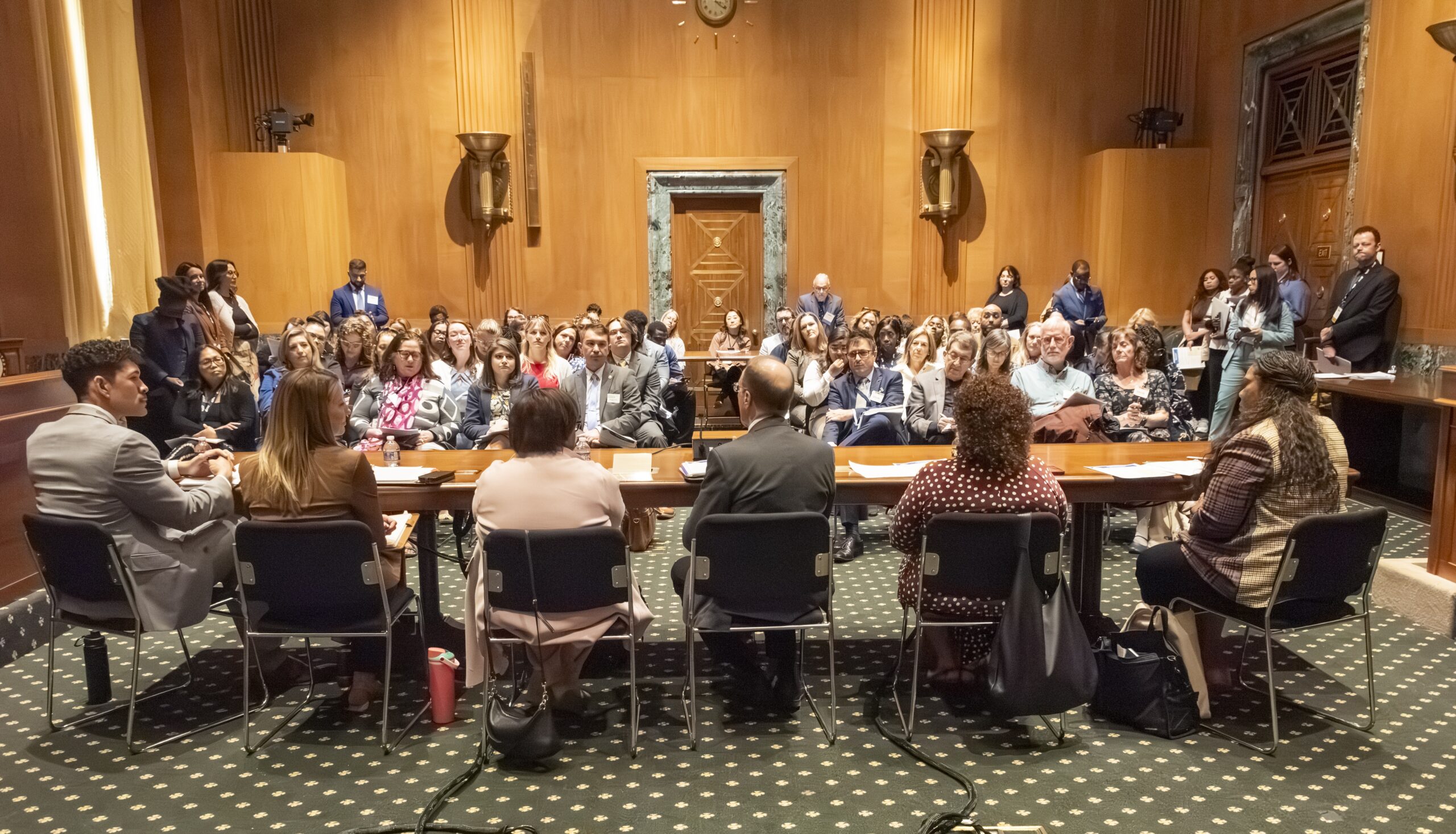
Make Your Voice Heard
Each year during CWLA’s annual conference, hundreds of our members and partners participate in Advocacy Day. The conference hotel is just across the bridge from the nation’s capital, and attendees can take advantage of the great location by visiting their Members of Congress to discuss the needs of the children and families.
Help educate lawmakers about the work you do and the families you serve
This year, buses will be provided for Advocacy Day registrants, leaving the hotel at 11:50 am and returning for the evening reception. You must sign up in order to reserve your spot on the bus; if you do not sign up, we cannot guarantee you a seat. Contact kmapa@cwla.org to request a seat on the bus.
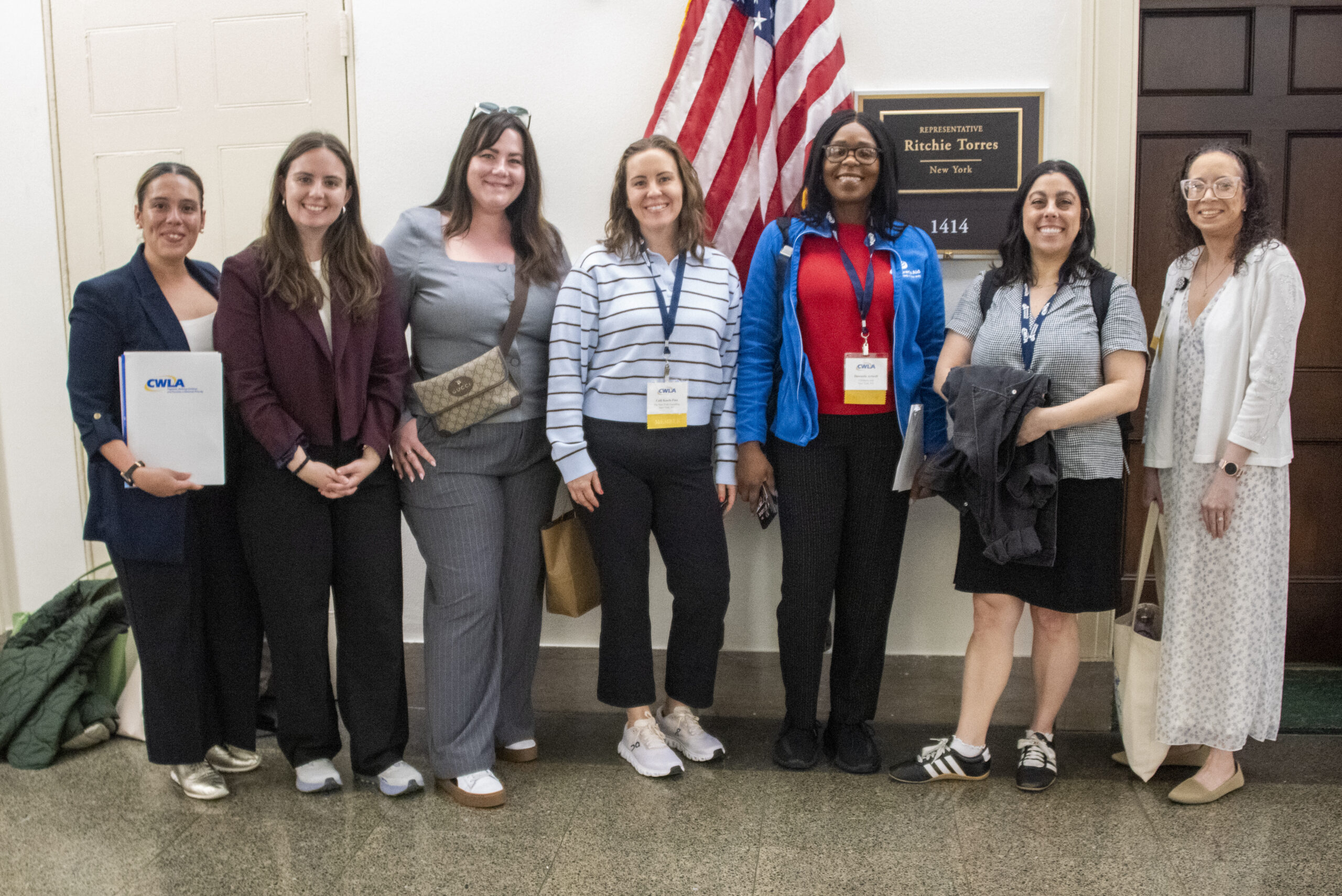
Training Institute
CWLA’s pre-conference Training Institute affords attendees the opportunity to work closely with experts in the field at a deeply discounted rate. Trainings will be held on Sunday, April 4, 2027 from 12:30pm – 4:30pm, with a 30 minute break. Premium Ticket holders are automatically given access to the Training Institute. Professionals can also attend the Training Institute without attending the full conference.
Tickets for the pre-conference Training Institute are: $165 for organizational members, $185 for individual members, and $205 for non-members.
Moral Injury Training: Understanding, Healing, and Building Resilience
With the shifts in policy priorities and accompanying uncertainties in funding, we see a growing need to focus our attention on the increasing moral injury occurring for the workforce. While not a new issue in fields such as the military, moral injury has begun to be recognized as an emergent and urgent topic at the intersection of child welfare, behavioral health, ethics, and systems of care. Moral injury occurs when individuals are put in positions where they act, or find themselves unable to act, in ways that deeply violate their personal values, leaving lasting psychological and emotional impacts. This modified version of the 6-hour training series offered by CWLA will share with attendees what the research tells us, including in other fields, and through case examples to help participants gain a deeper understanding of moral injury, how it presents in in ourselves, our child welfare systems, and in our communities. Attendees will receive practical tools and resources and learn what supervisors, leaders, and organizations can do to support recovery, foster ethical resilience, and create environments that are rooted in compassion and accountability.
Facilitators: Julie Collins, CWLA VP of Practice Excellence; Melinda Baldwin, CWLA Mental Health Advisory Board
Supervising for Excellence and Success
The quality of supervision is recognized as a significant factor in an organization’s overall capacity and ability to provide services that achieve operational goals and desired outcomes for children, youth, and families. Quality supervision is also an important factor associated with a positive work environment, staff retention, and professional development. This session focuses in-depth on the essential practice elements and functions of supervision. This overview will highlight content about supervisory functions (Leading, Planning, Organizing, Teaching, Supporting, and Evaluating) framed through discussion, self-reflection, and group exercises. Practice elements critical to supporting professional engagement, partnership, and team building in supervision will be highlighted to align with research and best practices. Discussions will touch on the supporting theoretical concepts related to the supervisory role and related skills and competencies.
Facilitator: Deborah Wilson Gadsden, CWLA Director of EIB and Professional Development
Strengthening Kinship Care
Kinship caregivers are often considered as an alternative for children to prevent them entering foster care in the child welfare system. For years, the thought has been that this is most beneficial for the child because there is an established relationship with the individuals who will be providing for their daily needs. This may ring true in many cases, however, there are unique challenges for family members who step into the kinship caregiver role, including: navigating relationships between birth parents and other relatives; working with systems and interacting with case workers, therapists, and community providers; and managing self-care, personal relationships, and dedicating time with other children residing in and outside the household. This engaging and interactive session is focused on how to increase opportunities to support kinship caregivers while reducing the chance of placement disruption. This training will feature group activities, peer-to-peer learning, and insight from the lived experiences of participants.
Facilitator: Marcus Stallworth, CWLA Director of Training and Implementation
Julie Collins, MSW, LCSW, has been with CWLA since 2001 and currently serves as Vice President of Practice Excellence. She brings more than 40 years of experience in child welfare, mental health, substance use, and managed care in both Canada and the United States. At CWLA, she oversees the Standards of Excellence for Child Welfare and leads efforts to identify best practices across the continuum of services. Her work includes training and technical assistance related to cross-system collaboration, program and system reform, organizational assessment, trauma- and culturally responsive care, and secondary traumatic stress. She has authored and edited numerous publications and serves on multiple federal advisory committees.
Deborah Wilson Gadsden is a licensed social worker in Pennsylvania, and serves as CWLA’s Director of Training and Professional Development. As a 50-year veteran in the field of child welfare, she holds an M.A. in Human Services from Lincoln University and Masters of Social Work from Temple University. She is a certified trainer for the PA Child Welfare Resource Center, the Olweus Bullying Prevention Program, and the Workplace Bullying Institute.
Marcus Stallworth serves as CWLA’s Director of Training and Implementation, which has provided him the opportunity to assist child welfare agencies across the US and internationally with implementation strategies to achieve positive outcomes for children and families. Having spent close to 20 years providing Child Protective Services, he is recognized by the State of Connecticut as an expert witness for Superior Court for Juvenile Matters. He has spearheaded several initiatives to promote the engagement of Fathers, identify the dangers of social media, and raise the awareness for equity and inclusion. Marcus is Vice President of the Board of Directors for CT’s Court Appointed Special Advocates (CASA). He is a member of Media Literacy Now’s national advisory council, which provides advocacy and resources for educators, students, and parents. He is also a proud father of two, and recipient of the 100 Men of Color award in 2017.
Your Sponsorship Makes These Events Possible
Sponsorships are essential to our ability to hold conferences. Your support makes all the difference.
Exhibiting & Advertising
For the first seven weeks of sales, only sponsors may reserve exhibit space. New for 2027, Supporter sponsors may submit their top three booth preferences, while Advocate sponsors and above may select from the locations available within their package. Final booth placement is subject to availability and confirmed by CWLA.
Exhibit booths go on sale to the general public on Monday, December 7, 2026 at 1:00pm ET.
Sponsors may book their booths now.
Find the space the best fits your organization’s needs: View the Exhibit Map
Skyview Exhibit Fees (Booths 2-11)
- Available exclusively as part of premium conference sponsorships.
Skyview sponsors can attend CWLA’s Members-Only Welcome Reception on Sunday, April 4, 2027 from 5:00pm – 6:00pm.
Main Hall and Corridor Fees (Exhibit Hall – booths 12-40)
- $1,950 for Non-Member organizations
- $1,650 for Member organizations
Exhibit booths include:
-
- 8′ x 10′ space with standard booth drapery
- 6′ x 2′ draped table
- 2 side chairs
- A complimentary registration for one exhibit staffer with access to all conference sessions, workshops, and meals
One additional exhibit staffer can be registered at a special rate of $550 - A 7″ x 44″ booth identification sign
- Post-conference attendee email list for follow-up outreach
- Dedicated exhibit hall times and functions
- Optional add-on: program ads
Interested in promoting your products and services in the conference program? Explore our Advertising Opportunities (on 2nd tab of this section) to maximize your brand exposure!
Exhibit Hall Dates & Times (subject to change)
- Set up: Sunday, April 4, 2027, 2:30pm – 4:30pm for Skyview only; 6:00pm – 9:00pm for Main Hall & Corridor
- Dismantle: Tuesday, April 6, 2027, after 6:00pm
- Exhibiting Dates & Times: Sunday, April 4, 2027, from 5:00pm – 6:00pm for Skyview only; all exhibitors on Monday, April 5, 2027, from 7:45am – 6:15pm and Tuesday, April 6, 2027, from 7:45am – 6:00pm
Registration and Payment:
- Registering means you agree with the Terms and Conditions
- Payment in full is due with registration.
Questions? Get in touch with us at CWLA2027@cwla.org
Advertising
Maximize your exposure! Advertise in CWLA’s printed Conference Program to ensure increased visibility, brand awareness, and engagement with our attendees. All advertisements are printed in full color!
Deadlines
- Reserve program ad space by February 5, 2027
- Submit art to CWLA2027@cwla.org by February 12, 2027
Registration and Payment:
- To advertise, contact CWLA2027@cwla.org. Registering means you agree with the Terms and Conditions.
Ad Sizes and Rates:
| Ad Type | Size (Inches) | Cost |
| Sixth Page | 2.5 x 4.75 | $405 |
| Quarter-Page Vertical | 3.37 x 4.75 | $780 |
| Half-Page Vertical | 3.75 x 9.25 | $1,500 |
| Half-Page Horizontal | 7.50 x 4.75 | $1,500 |
| Full Page (no bleed) | 7.50 x 10.00 | $2,885 |
| Full Page (bleed) | 8.75 x 11.25 | $2,885 |
Our collective mission is clear: to build a future where every child is safe, every family is strong, and every community flourishes. To further this common goal, CWLA holds an annual conference that gathers the brightest minds in child welfare and allied fields to share innovative and sustainable solutions that strengthen child and family outcomes.